
How to Sell an Apartment Building in Los Angeles: The Step-by-Step Process
Q4 2026
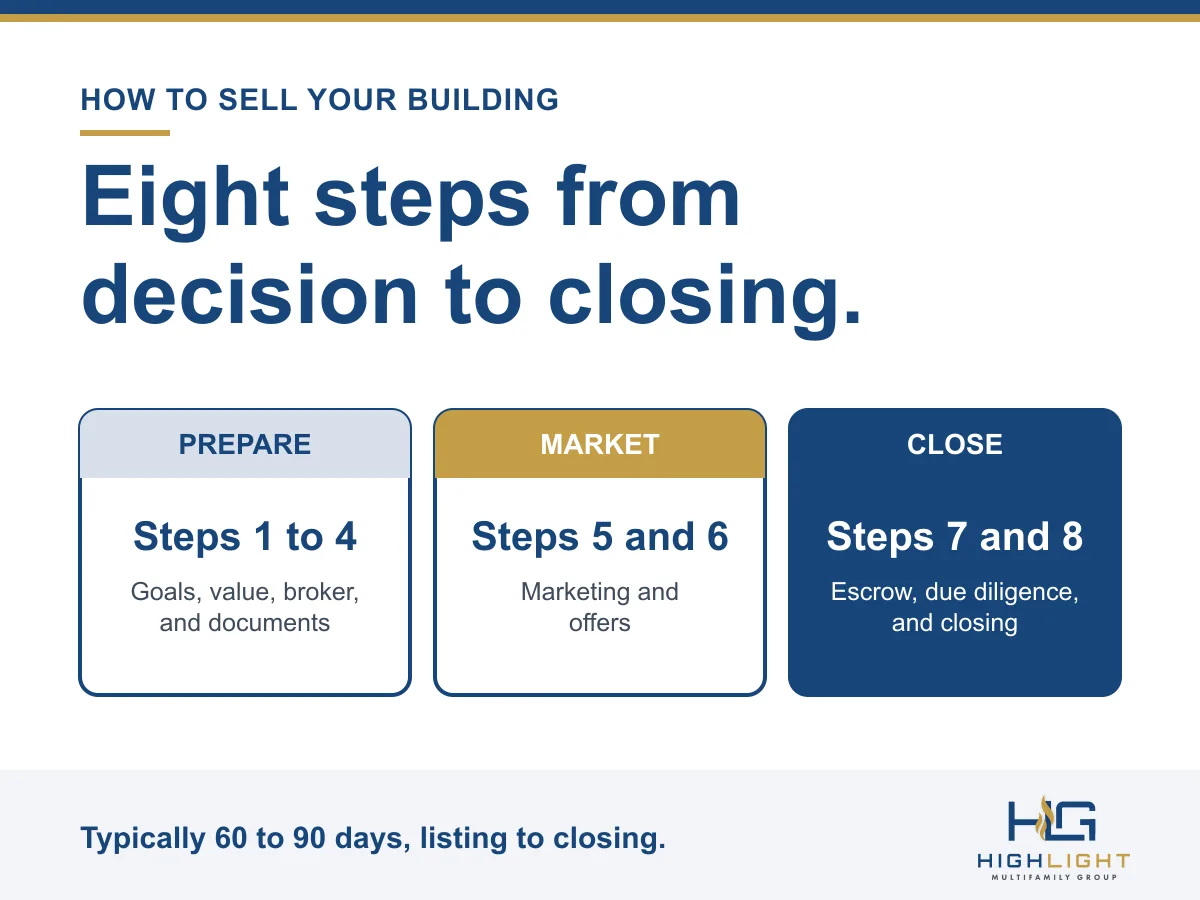
How Long Does It Take?
A typical Los Angeles apartment sale takes 60 to 90 days from listing to closing: a few weeks of marketing, then 30 to 45 days of escrow. The preparation before you list comes on top of that, and it is time well spent. Every deal is different, but the steps below are the same on almost every sale.
Step 1: Decide What You Want From the Sale
Start with your goal: the highest price, a certain closing date, a smooth 1031 exchange, a quiet sale, or a clean exit. Your goal shapes the pricing, the marketing, and the timeline. If you are still deciding whether to sell at all, our seven questions to ask first is a good place to start.
Step 2: Find Out What the Building Is Worth
Get a realistic number before you commit to anything. Start with our free property value calculator for a quick range, then ask for a Broker Opinion of Value, which looks at your actual rents, condition, and comparable sales. We explain how it differs from a formal appraisal in our article on Broker Opinion of Value vs. appraisal. A price that matches the market draws more and better offers than one that is too high and has to be cut later.
Step 3: Choose a Broker and Sign a Listing Agreement
The broker you hire runs the process, so choose carefully. Our guide on how to choose a multifamily broker covers what to check. The listing agreement sets how long the listing lasts, the commission, and what happens if the building sells to a buyer you already know. Read it closely, and negotiate the terms before you sign.
Step 4: Gather Your Documents
Buyers ask for the same items on day one, and having them ready keeps momentum. Typically that means a current rent roll, the leases, and the last two to three years of income and expenses, along with your utility bills, property tax bill, insurance, permits, inspection reports, and records of major repairs. In Los Angeles, have your Rent Stabilization Ordinance registration and fee records ready as well.
Accurate numbers matter more than polished ones, because buyers check everything against your records and the leases. Utility bills deserve special attention, as we explain in our article on why diligent owners track them every month.
Step 5: Market the Building
Your broker prepares an offering memorandum that presents the building’s income, expenses, rent roll, unit mix, photos, and the case for buying it, and then gets it in front of buyers. Good marketing means calling investors and other brokers directly, not just posting a listing and waiting. It also includes professional photos, often a property video, and clear answers to the questions buyers always ask.
Step 6: Review Offers and Negotiate
Offers usually arrive over a few weeks. Price matters, but so do the buyer’s financing, the length of the due diligence period, the size of the deposit, and how likely the buyer is to close. The highest offer is not always the best one. Your broker should help you compare offers on net proceeds and certainty, and negotiate the terms of the purchase agreement before you accept.
Step 7: Open Escrow and Go Through Due Diligence
After you accept an offer, escrow opens and the buyer begins due diligence: reviewing the leases, the financials, and the physical condition, often with inspections and tenant estoppels. This is the stage where price reductions are most often requested, so the accurate documents from Step 4 pay off. The buyer’s lender will usually order an appraisal during this period, which is one more reason to price the building on real comparable sales.
Step 8: Close
In the final weeks, the buyer removes contingencies and funds the purchase, and escrow records the deed and sends you your net proceeds. Plan for the costs of selling, including the broker’s commission, transfer taxes, and, for buildings in the City of Los Angeles priced above $5.4 million, Measure ULA. If you are doing a 1031 exchange, remember the clock: you have 45 days to identify and 180 days to close on your replacement property, so line up that plan before you list. The calendar can also affect your taxes, as we explain in our article on selling before year-end.
Where Sales Go Wrong
Three problems come up again and again: pricing too high at the start, rent roll or expense numbers that do not hold up in due diligence, and a buyer whose financing falls through. All three are easier to prevent than to fix, which is why the early steps matter most.
Ready to Start?
We guide LA apartment owners through each of these steps. To see where your building stands, request a free Broker Opinion of Value or start with the calculator. This article is general information, not legal or tax advice. Please talk with your attorney and CPA about your situation.
Frequently Asked Questions
How long does it take to sell an apartment building in Los Angeles?
A typical sale takes 60 to 90 days from listing to closing: a few weeks of marketing, then 30 to 45 days of escrow. The preparation before you list comes on top of that. Every deal is different, but the steps are the same on almost every sale.
What are the steps to selling an apartment building from start to finish?
There are eight: decide what you want from the sale, find out what the building is worth, choose a broker and sign a listing agreement, gather your documents, market the building, review offers and negotiate, open escrow and go through due diligence, and close.
What paperwork do I need to sell my apartment building?
Typically a current rent roll, the leases, and the last two to three years of income and expenses, along with your utility bills, property tax bill, insurance, permits, inspection reports, and records of major repairs. In Los Angeles, have your Rent Stabilization Ordinance registration and fee records ready as well.
Should I always take the highest offer on my building?
No. Price matters, but so do the buyer’s financing, the length of the due diligence period, the size of the deposit, and how likely the buyer is to close. Your broker should help you compare offers on net proceeds and certainty.
What fees and taxes come out of the money when I sell my apartment building?
Plan for the broker’s commission, transfer taxes, and, for buildings in the City of Los Angeles priced above $5.4 million, Measure ULA. If you are doing a 1031 exchange, you have 45 days to identify and 180 days to close on your replacement property.
What can go wrong when selling an apartment building?
Three problems come up again and again: pricing too high at the start, rent roll or expense numbers that do not hold up in due diligence, and a buyer whose financing falls through. All three are easier to prevent than to fix, which is why the early steps matter most.