
Off-Market or Listed? How to Sell an LA Apartment Building
Q4 2026
Key Takeaways
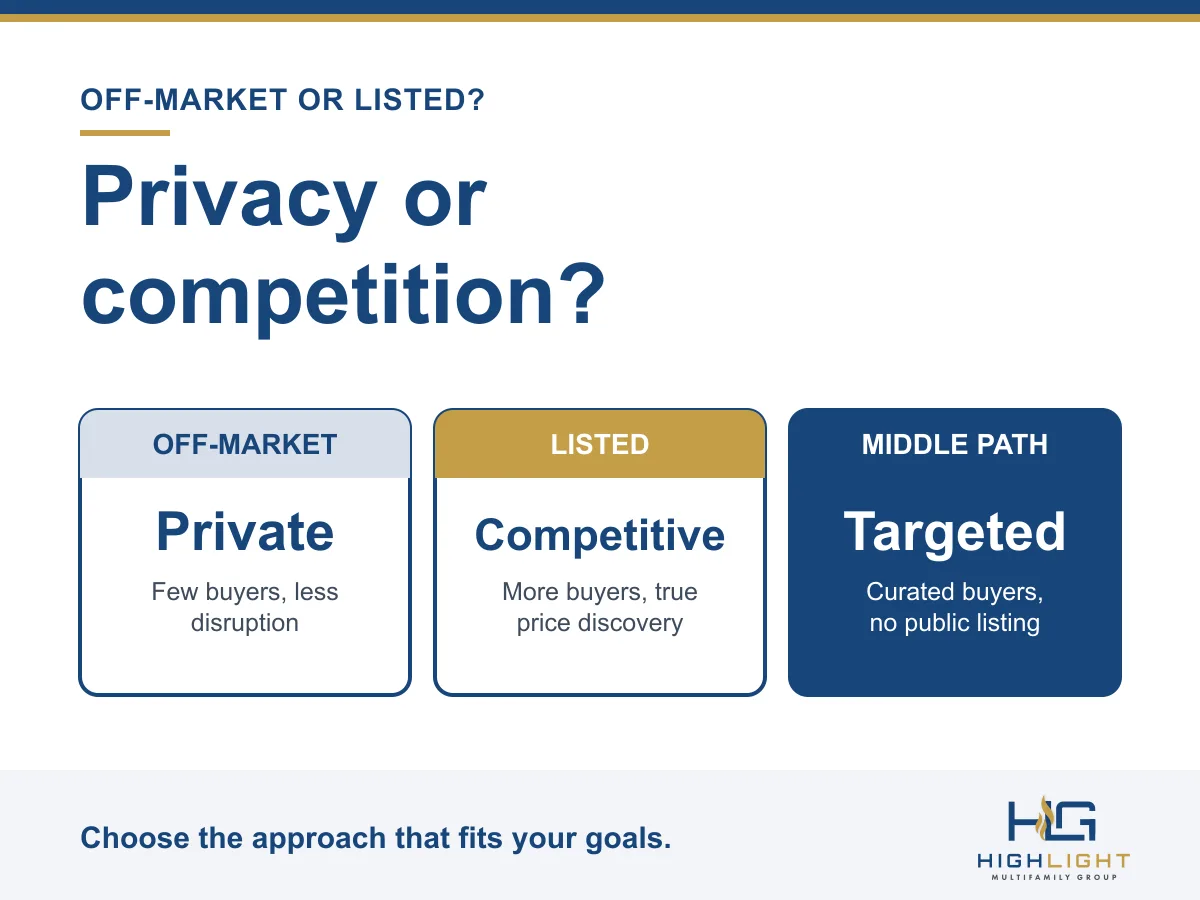
Selling off-market means offering your building to a limited group of buyers instead of marketing it publicly. Selling with a public listing means marketing it widely to as many qualified buyers as possible.
Off-market can offer privacy and less disruption. A wide listing usually offers the best chance at the highest price. The right choice depends on what matters most to you.
There is a middle path: targeted marketing to a curated list of proven buyers.
What an Off-Market Sale Is
An off-market sale, sometimes called a quiet or private sale, happens without a public listing. The broker contacts a small group of qualified buyers directly, often investors who have bought similar buildings before. Tenants and neighbors may never know the building is for sale.
What a Listed Sale Looks Like
In a listed sale, the broker markets the building to the whole buyer pool: investors, other brokers, and 1031 exchange buyers, using an offering memorandum, photos, video, and direct outreach. The goal is competition, because several interested buyers tend to push the price and the terms in the seller’s favor.
The Case for Selling Off-Market
Privacy. Some owners do not want tenants, employees, or neighbors to know a sale is possible, and families handling an inheritance often prefer discretion, as we describe in our guide to trust and estate sales.
Less disruption. With fewer buyers touring, there are fewer showings and fewer visits to tenants’ units.
Speed and simplicity. When a motivated buyer already knows the building type and neighborhood, the process can move quickly.
The Case for Listing Openly
More buyers means more competition, and competition is the surest way to find out what the market will actually pay. A public process also gives you a clear view of the true price, which matters if you are not certain of your building’s value. And buyers who are on a deadline, such as 1031 exchange buyers, are often in the market and ready to compete.
The Tradeoff
The main risk of an off-market sale is that you never learn what you left on the table. If only a few buyers see the building, the best offer may be lower than a wider market would have produced. The main risk of a listed sale is exposure: more people know, tenants may hear about it, and a building that sits on the market can start to look stale.
A Middle Path: Targeted Marketing
Many owners choose something in between. The broker contacts a curated list of buyers who are active in your neighborhood and your building type, without a public listing. This keeps the sale confidential while still creating some competition.
At 453 S Gramercy Pl in Koreatown, for example, we found an off-market buyer who was experienced with long-term, below-market tenancies, as we describe in the case study.
How to Decide
Ask yourself how important privacy is, how sure you are of your building’s value, how soon you need to close, and whether you are exchanging into other property on a deadline.
Then ask your broker how many qualified buyers they would contact, and how they know those buyers will pay a market price. A good answer includes names, recent purchases, and a plan for what happens if the first round does not produce a strong offer. Our guide on how to choose a multifamily broker lists more questions to ask, and our step-by-step guide to selling shows where marketing fits in the process.
Start the Conversation
We can walk through the options for your building and your goals. Start with a free, confidential Broker Opinion of Value, or see what you might expect with the free calculator. This article is general information, not legal or tax advice. Please talk with your attorney and CPA about your situation.
Frequently Asked Questions
What does it mean to sell my apartment building off-market, or quietly?
An off-market sale, sometimes called a quiet or private sale, happens without a public listing. The broker contacts a small group of qualified buyers directly, often investors who have bought similar buildings before, and tenants and neighbors may never know the building is for sale.
Will I get a lower price selling off-market?
Possibly. The main risk of an off-market sale is that you never learn what you left on the table, because if only a few buyers see the building, the best offer may be lower than a wider market would have produced. A wide listing usually offers the best chance at the highest price.
Should I put my apartment building on the market publicly?
More buyers means more competition, which tends to push the price and terms in the seller’s favor, and it shows you what the market will actually pay. Buyers on a deadline, such as 1031 exchange buyers, are often in the market and ready to compete.
Is there a middle path between off-market and listed?
Yes. The broker contacts a curated list of buyers who are active in your neighborhood and building type, without a public listing. This keeps the sale confidential while still creating some competition. See our case study of 453 S Gramercy Pl, where we found an off-market buyer experienced with long-term, below-market tenancies.
How do I decide whether to sell quietly or list my building publicly?
Ask how important privacy is, how sure you are of your building’s value, how soon you need to close, and whether you are exchanging into other property on a deadline. Then ask your broker how many qualified buyers they would contact and how they know those buyers will pay a market price. Families handling an inheritance often prefer discretion, as we describe in our guide to trust and estate sales.