
Selling an LA Apartment Building With Tenants Under Rent Control
Q4 2026
Can You Sell a Building With Tenants in It?
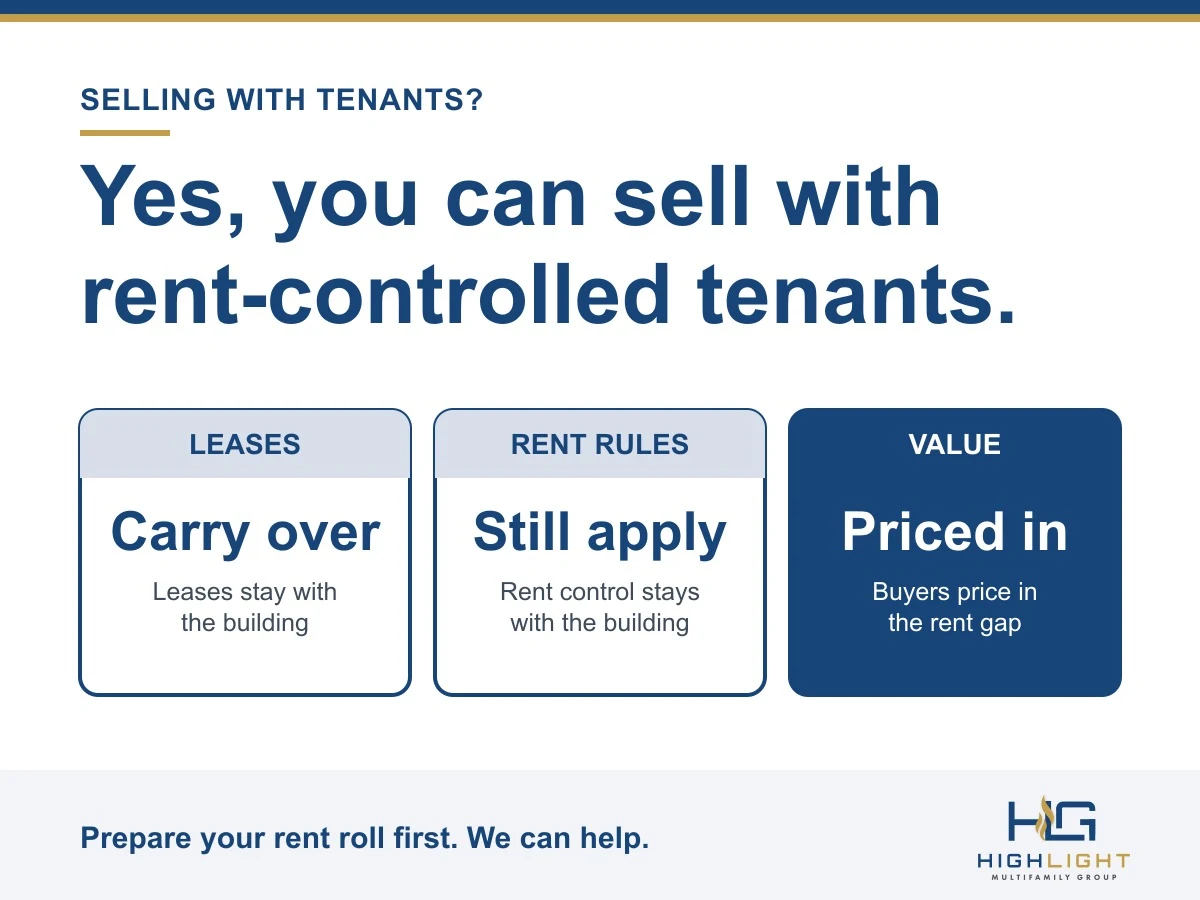
Yes. Most apartment buildings in Los Angeles sell with tenants in place, and many buyers specifically look for occupied buildings with stable income. A sale does not by itself end anyone’s tenancy. The leases and the rent rules that apply to the building stay with the building, so the new owner steps into the owner’s position.
That is also why rent control matters so much to value. A buyer is not paying for what the building could earn at today’s market rents. They are paying for what it earns under the rules that apply to your tenants.
Which Rent Rules Apply to Your Building
In Los Angeles, apartment buildings with a certificate of occupancy issued before October 1, 1978 are generally covered by the City’s Rent Stabilization Ordinance (RSO), which limits annual increases and adds eviction protections. Newer buildings typically fall under the statewide AB 1482 cap instead. Our article on the 2026 AB 1482 rent cap explains the current numbers.
Which set of rules applies to your property affects your income, your expenses, and how buyers underwrite the deal, so it is the first thing we confirm.
How Below-Market Rents Affect Price
Long-term tenants in rent-controlled units often pay well below what a vacant unit would rent for today. Buyers call this the loss to lease, and they value it carefully. They will usually price the building on the rents in place, then add some value for the upside they can capture as units turn over naturally. A building with all long-term tenants sells differently from one with several vacant units.
Two examples from our own work show how it plays out. At 453 S Gramercy Pl, most tenants were long-term occupants paying well below market, and we found an off-market buyer experienced with exactly that kind of property, as we describe in our case study. At 1513 Arlington Ave, vacant units gave buyers a clear way to see the opportunity, which we cover in that case study.
Vacant Units
Under California law, a unit that becomes vacant can generally be re-rented at market rent, which is why units delivered vacant are attractive to buyers. If you have vacant units, they are often worth highlighting. Any agreement to have a tenant move out voluntarily has to follow state and City rules, so talk to a landlord-tenant attorney before offering or signing one.
Getting Ready to Sell With Tenants in Place
A few steps make the process smoother and protect your price.
Build an accurate rent roll. Buyers will check every rent, lease start date, and unit against your records and the leases, and mistakes cost credibility.
Gather your lease files. Have each tenant’s lease, any addenda, and notices ready, along with a clear record of security deposits, since deposits transfer to the buyer.
Confirm your City compliance. Make sure your RSO registration and fees are current, because a buyer’s attorney will ask.
Expect estoppel requests. Buyers often ask tenants to confirm the terms of their tenancy during escrow, and clean files make this quick.
Keep your rental practices normal. Continue to follow the usual rules for repairs and for giving tenants proper written notice before entering a unit, including for showings.
Talking With Your Tenants
Tell tenants about a sale honestly, and do not promise anything on a buyer’s behalf. Most tenants just want to know that their lease and their rent stay the same, and in a sale of an occupied building they generally do. Showings, inspections, and estoppels all require some access to units, so plan for them with proper notice.
Measure ULA and Other Costs of Selling
Rent rules are only part of the picture. For buildings priced near $5.4 million or $10.9 million inside the City of Los Angeles, the Measure ULA transfer tax can change what you net, as we explain in our Measure ULA guide. And if you are still deciding whether to sell, start with our list of seven questions to ask first.
Choosing a Broker to Sell a Rent-Controlled Building
A rent-controlled building is priced on its rents in place, its loss to lease, and its tenants, so the broker you hire needs real experience with those details. Ask whether they have sold similar rent-stabilized buildings in your neighborhood recently, how they would present your rent roll and the upside to buyers, and which buyers they would approach, since some investors specialize in buildings with long-term, below-market tenants.
Our guide on how to choose a multifamily broker lists seven things to check before you sign, and our step-by-step guide to selling shows how the process runs from pricing to closing.
Start With a Number
We help owners sell occupied, rent-controlled buildings across Los Angeles every year. Start with our free property value calculator, then request a free Broker Opinion of Value and we will walk you through how your rent roll, your tenants, and your timeline affect your price.
This article is general information, not legal advice. Rent control and tenant laws are detailed and change, so please confirm how they apply to your building with a landlord-tenant attorney.
Sources
Frequently Asked Questions
Can I sell my apartment building with tenants still living in it?
Yes. Most apartment buildings in Los Angeles sell with tenants in place, and many buyers look for occupied buildings with stable income. A sale does not by itself end anyone’s tenancy. The leases and the rent rules that apply to the building stay with the building, so the new owner steps into the owner’s position.
How do I know if my building is rent controlled in Los Angeles?
Apartment buildings in Los Angeles with a certificate of occupancy issued before October 1, 1978 are generally covered by the City’s Rent Stabilization Ordinance (RSO), which limits annual increases and adds eviction protections. Newer buildings typically fall under the statewide AB 1482 cap instead. See our article on the 2026 AB 1482 rent cap.
My tenants pay low rent. How does that affect what I can sell my building for?
Buyers call the gap between in-place and market rents the loss to lease, and they value it carefully. They usually price the building on the rents in place, then add some value for the upside they can capture as units turn over naturally. A building with all long-term tenants sells differently from one with several vacant units.
Can I raise the rent to market price when a tenant moves out of a rent-controlled unit?
Under California law, a unit that becomes vacant can generally be re-rented at market rent, which is why units delivered vacant are attractive to buyers. Any agreement to have a tenant move out voluntarily has to follow state and City rules, so talk to a landlord-tenant attorney before offering or signing one.
What do I need to get ready before selling a building with tenants?
Build an accurate rent roll, gather each tenant’s lease and a clear record of security deposits (which transfer to the buyer), confirm your RSO registration and fees are current, and expect buyers to request estoppels, in which tenants confirm the terms of their tenancy during escrow.
What should I tell my tenants when I am selling the building?
Tell them honestly, and do not promise anything on a buyer’s behalf. Most tenants just want to know that their lease and their rent stay the same, and in a sale of an occupied building they generally do. Showings, inspections, and estoppels require some access to units, so plan for them with proper written notice.